
That polished, just-left-the-salon finish can disappear quickly when hair is exposed to more heat than it needs. A smart heat styling protection guide is not about avoiding your favorite straightener, dryer, or curling tool. It is about using premium technology with the same care you give to a great cut or color – so your style looks sleek today without compromising softness, shine, or strength tomorrow.
Heat Styling Protection Guide: Protect Hair Before You Begin
Heat protection starts before the tool switches on. Hair that is dehydrated, coated in heavy product buildup, or roughly towel-dried is more vulnerable to a hot airflow or styling plate. Give yourself a better foundation by working on clean, conditioned hair and removing excess water gently with a microfiber towel or soft cotton T-shirt. Rubbing hair aggressively creates friction, which can leave the cuticle lifted before styling even begins.
Apply a dedicated heat protectant to damp hair before blow-drying. Look for a formula that provides even coverage without making the hair sticky or heavy. Creams can suit thick, dry, or textured hair, while lightweight sprays often work well for fine hair that loses volume easily. The best formula is the one you will use generously and consistently, especially through the mid-lengths and ends.
Heat protectant is not a permission slip to use maximum temperature. It creates a protective layer and can reduce moisture loss, but it cannot fully offset repeated, excessive heat. Think of it as a refined finishing layer in a complete routine, not the entire routine itself.
Start With Hair That Is Mostly Dry
For conventional flat irons and curling wands, hair should be completely dry before it touches the heated surface. Styling damp hair with a tool designed for dry hair can force water within the strand to heat rapidly, leaving hair rough, brittle, and prone to breakage. If you hear sizzling, pause. That sound is a clear sign that there is still moisture or too much product on the section.
A quality dryer makes this stage more controlled. Use the concentrator attachment when you want a smooth blowout, and point airflow from roots to ends to support a sleeker finish. Keep the dryer moving rather than holding it in one spot. High airflow and thoughtful direction often deliver faster results than simply turning the temperature up.
Choose the Right Temperature for Your Hair
The ideal setting depends on hair density, texture, color history, and the look you want to create. Fine, fragile, bleached, or frequently highlighted hair generally needs a low setting. Coarse, dense, or highly textured hair may need more heat to create a smooth finish, but even then, the lowest effective temperature is the luxury choice. It preserves the look of healthy hair rather than chasing an overly hot, short-term result.
As a practical starting point, fine or color-treated hair often responds well around 250 to 325°F. Medium or healthy hair may need 325 to 375°F. Thick, coarse, or resistant hair can sometimes require 375 to 400°F, although 400°F and above should be reserved for occasional use and approached carefully. Your hair should not need multiple slow passes at a high setting to cooperate.
If one pass does not smooth a section, the answer may not be more heat. It may mean the section is too large, the hair was not dried thoroughly, or the tool is not moving with enough control. Smaller, cleaner sections create better contact and more even results, often at a lower temperature.
Let the Tool Do the Work
Premium hair technology is designed to offer greater control, but technique still matters. With a straightener, glide steadily from root to end without stopping on one area. With a curling tool, avoid wrapping the same section repeatedly just to make the curl tighter. Allow the curl to cool before brushing or shaping it. This sets the style with less need for another round of heat.
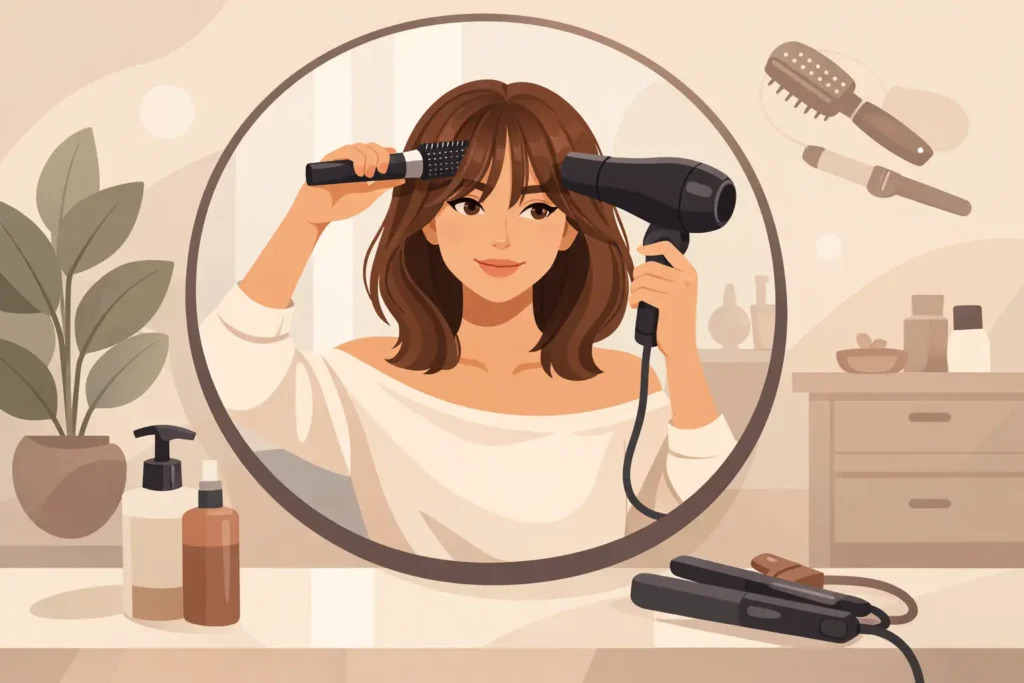
For blowouts, use a brush that matches your goal. A larger round brush creates a soft, expensive-looking bend and volume. A paddle brush favors a straighter finish. Tension is useful, but pulling aggressively can strain delicate hair around the hairline and crown. The goal is polished movement, not a style that feels tightly stretched.
Layer Products With Intention
Too many styling products can cause hair to feel coated, dull, or stiff under heat. A simpler approach usually performs better: a heat protectant on damp hair, one styling product for your desired result, and a light finishing product after the hair has cooled.
If frizz is your main concern, choose a smoothing cream or humidity-resistant spray after your protectant. If you want volume, apply a root-lifting product primarily at the scalp and keep richer formulas away from the roots. For curls, a mousse or flexible-hold styling cream can help the pattern last, which means you are less likely to restyle the next morning.
Oils deserve a little restraint. A small amount through dry ends can add beautiful shine after styling, but applying a heavy oil immediately before a hot tool can make hair feel greasy and may interfere with even styling. Use it as a finishing touch, not as your main form of heat protection unless the product is specifically formulated and labeled for heat use.
Sectioning Is a Form of Heat Protection
Neat sectioning may feel like an extra step, but it is one of the easiest ways to reduce unnecessary exposure. Clip the upper layers away and work in sections that are narrow enough for your tool to style in one controlled pass. This prevents the familiar cycle of repeatedly running a straightener over a bulky section until every strand finally catches up.
Pay special attention to the ends. They are the oldest part of the hair and usually show dryness first. When straightening, use a lighter hand and slightly quicker glide as you reach the last few inches. When curling, leave a small amount of the ends out if you prefer a modern, relaxed finish. It can look intentional while limiting direct contact on the most delicate area.
The same principle applies to touch-ups. If your roots need refinement on day two, style only the roots. If a few face-framing pieces have lost their shape, refresh those pieces instead of reheating your entire head of hair. Small, targeted adjustments keep your routine efficient and your hair looking more naturally healthy.
Know When to Take a Heat Break
Even the best heat styling protection routine benefits from days off. If hair feels unusually dry, tangles more than usual, loses elasticity when wet, or develops visible split ends, reduce heat while you rebuild moisture and strength. A rich mask, gentle detangling, and protective no-heat styles can make a noticeable difference over a few weeks.
This does not mean you need to give up your polished routine. It means choosing the right finish for the condition of your hair. A low bun, soft braid, air-dried waves, or a smooth ponytail can look just as considered as a full blowout. Save high-heat styling for the occasions when it adds the most value to your look.
Color-treated hair deserves extra attention because lightening and frequent coloring can make the cuticle more porous. Lower settings, conditioning treatments, and fewer passes are especially worthwhile here. If your stylist has given you specific guidance after a color service, follow that advice over any general temperature rule.
Make Better Styling the Everyday Standard
Great hair tools are an investment in speed, finish, and control, but the real difference comes from how you use them. Prepare hair thoroughly, choose a temperature based on its current condition, work in clean sections, and stop once the style is set. These small decisions protect the glossy, touchable quality that makes salon-worthy hair feel so special.
The next time you reach for your favorite tool, start lower than you think you need. Your hair may surprise you – and the shine that lasts beyond wash day will be the proof.